The music
Gospel, country, blues, rockabilly
A short primer on the styles behind the Johnny Cash and Elvis Presley songbooks, from Southern hymns and hillbilly radio to the Memphis sound and Nashville polish.
Check tribute dates ↗Quick answer
The two catalogues in the tribute grew from the same Southern roots: gospel at home and in church, country music on the radio, and the blues and rhythm and blues that Sun Records' founder loved. Rockabilly, the mix of country and rhythm and blues that both men recorded in Memphis in the 1950s, is where the strands meet.
Why the roots matter on the night
You do not need any of this to enjoy a tribute show. But knowing where the songs came from changes how you hear them. A slow number that sounds like a hymn often is one at heart; a fast one with a slapped bass and a twang in the voice is rockabilly, the sound both men made their names with in Memphis. This primer follows the strands in roughly the order the two singers met them, and it describes styles, not a set list.
Gospel
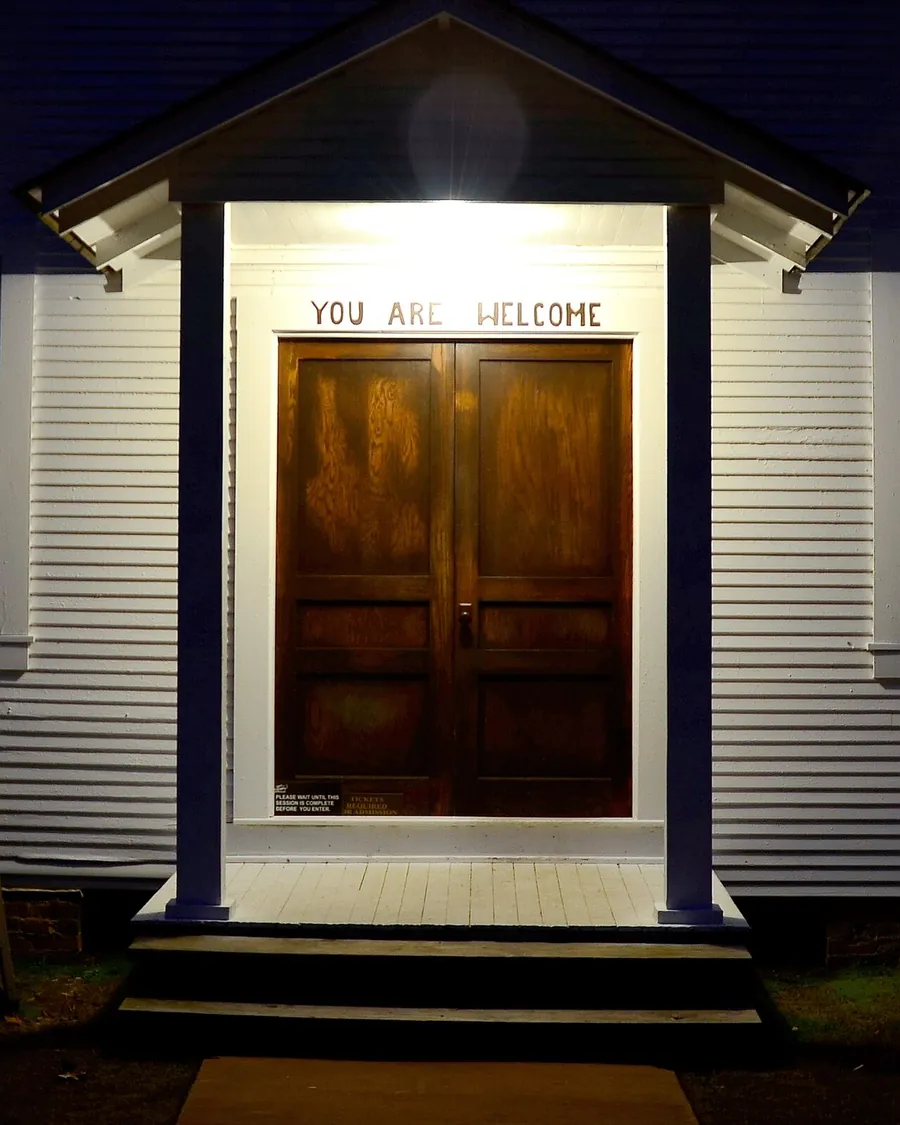
Gospel music is a genre of Christian music marked by dominant lead vocals, often with strong harmonies. In the white Southern tradition it was often sung by quartets, which earned it the nickname quartet music and a traditional set-up of four men and a piano. Both singers grew up inside it. Presley's family attended an Assembly of God church, where he found his first musical inspiration. Cash's early memories were dominated by gospel music and the radio, and he auditioned for Sun by singing mostly gospel songs.
Country
In the 1940s and 1950s country music was widely called hillbilly music, and the word survives inside rockabilly. Cash, the son of poor cotton farmers in Arkansas, sang on a local radio station as a teenager and found his first success on the country charts. Presley, as a schoolboy in Tupelo, was teased for playing hillbilly music. Country gave both men their storytelling and many of the songs they sang for pleasure: at the famous Sun session of December 1956, country and country gospel loomed large.
Blues
The blues took shape among African Americans in the Deep South around the 1860s. It is built on call and response, the blues scale and set chord progressions, most commonly the twelve-bar blues, along with flattened blue notes. Early verses often repeated a single line; later the AAB pattern became standard, a line sung, repeated and answered. The form runs through jazz, rhythm and blues and rock and roll, which is why it surfaces in so much of what both men recorded.
Rhythm and blues
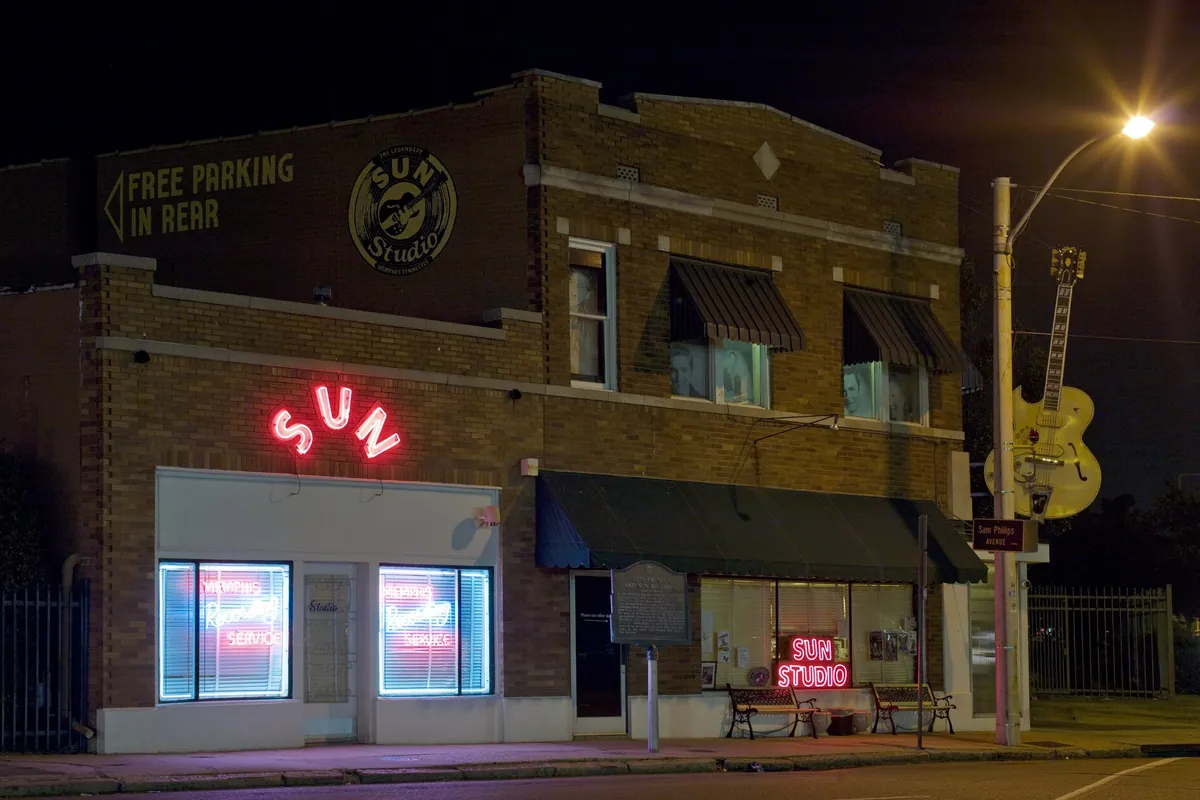
Rhythm and blues originated in African American communities in the 1940s. Sam Phillips, who founded Sun Records in Memphis in 1952, loved it, and before Presley his label had concentrated mainly on African American musicians, because he wanted to bring rhythm and blues to a white audience. Blues and rhythm and blues artists such as Howlin' Wolf and B.B. King recorded at the Sun studio in the early 1950s, before the rockabilly years.
Rockabilly
Rockabilly is one of the earliest styles of rock and roll, dating to the early 1950s, especially in the South. It blends country with rhythm and blues; its name joins rock to hillbilly. Strong rhythms, boogie-woogie piano riffs, vocal twang and tape echo defined it. Presley, with the guitarist Scotty Moore and the bassist Bill Black, was one of its pioneers, and Cash rose to fame in the rockabilly scene in Memphis in the mid-1950s. The style waned in the late 1950s and came back in a revival in the late 1970s and early 1980s.
The Nashville sound
While rock and roll was hurting country record sales, producers in Nashville answered with polish. The Nashville sound, which emerged in the 1950s, swapped the fiddles, steel guitar and nasal vocals of honky-tonk for strings, background voices and crooning leads. It was pioneered by staff at RCA Victor, Columbia and Decca in the city. One essayist argues that Presley's own recording of Don't Be Cruel, made in July 1956, sparked the era.
Listening for the strands
On the night, try hearing each song as a mix of these parts: a gospel-style ballad, a country story, a rockabilly rave-up with a walking bass. A tribute performer moving between Cash and Presley is moving between the deep, steady country end of this family and its rock and roll end.
Frequently asked questions
What is rockabilly?
One of the earliest styles of rock and roll, from the early 1950s American South: country music blended with rhythm and blues.
Did Cash and Presley sing gospel?
Both grew up with it. Presley found his first inspiration in church, and Cash auditioned for Sun mostly with gospel songs.
Sources
- Gospel music (Wikipedia, as checked 4 Nov 2026)
- Southern gospel (Wikipedia, as checked 4 Nov 2026)
- The blues (Wikipedia, as checked 4 Nov 2026)
- Rhythm and blues (Wikipedia, as checked 4 Nov 2026)
- Rockabilly (Wikipedia, as checked 4 Nov 2026)
- The Nashville sound (Wikipedia, as checked 4 Nov 2026)
- Sun Studio (Wikipedia, as checked 4 Nov 2026)